Boxers
Everyday boxers that start from Mattie G. Kunz’s 1914 Formula for Drawers: one piece per leg, no side seam, drafted to your own waist. Pick a layer below, then print it or download the cut file for your size.
From the public record: Mattie G. Kunz, Manual of Apparel Drafting and Sewing, 1914, revised edition.
Exactly as Kunz printed it in 1914: open drawers, drafted from your waist, length and limb.
The same drawers with 7 gaps in the 1914 draft filled, worked for six waists. Each fix gives its reason.
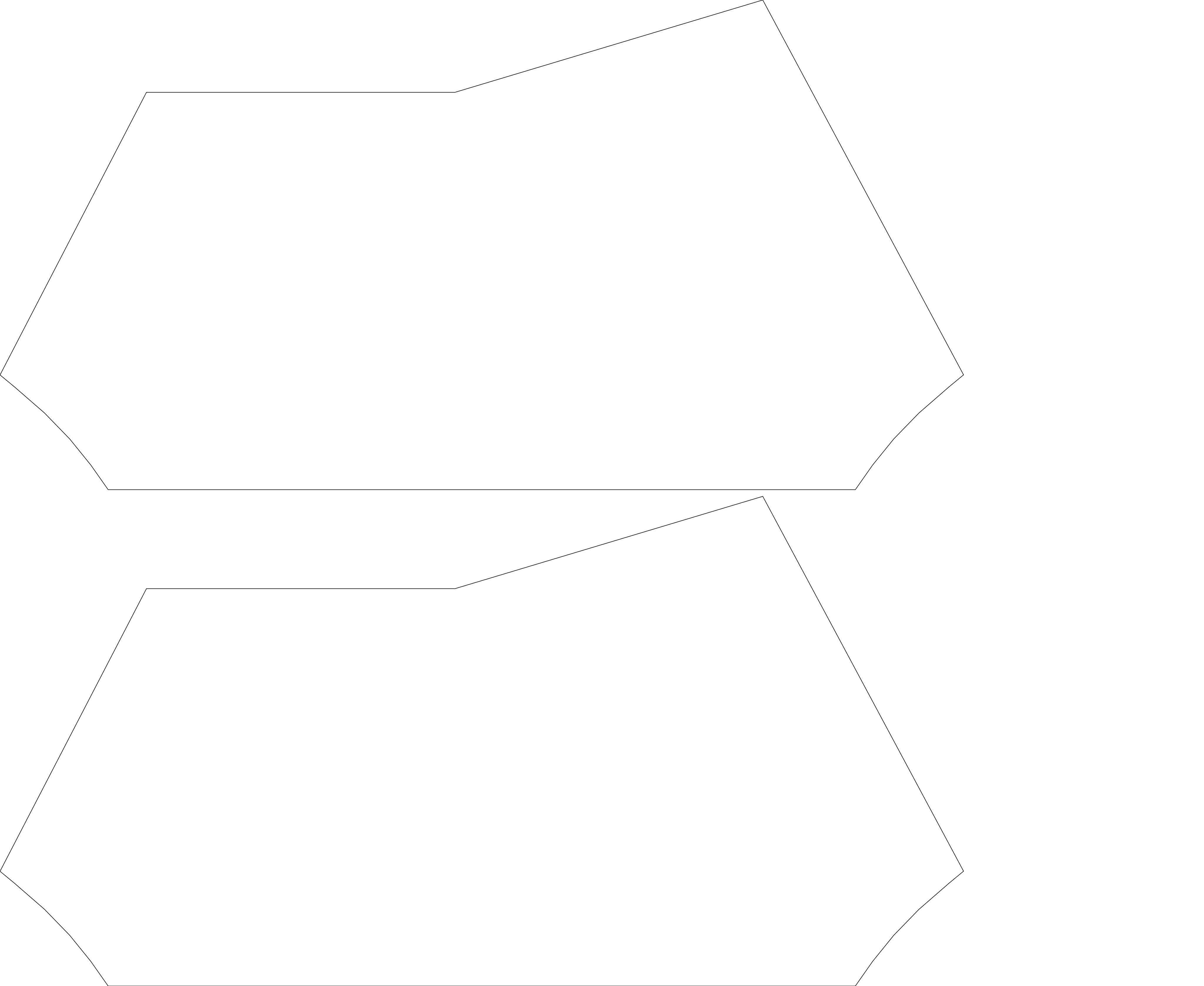
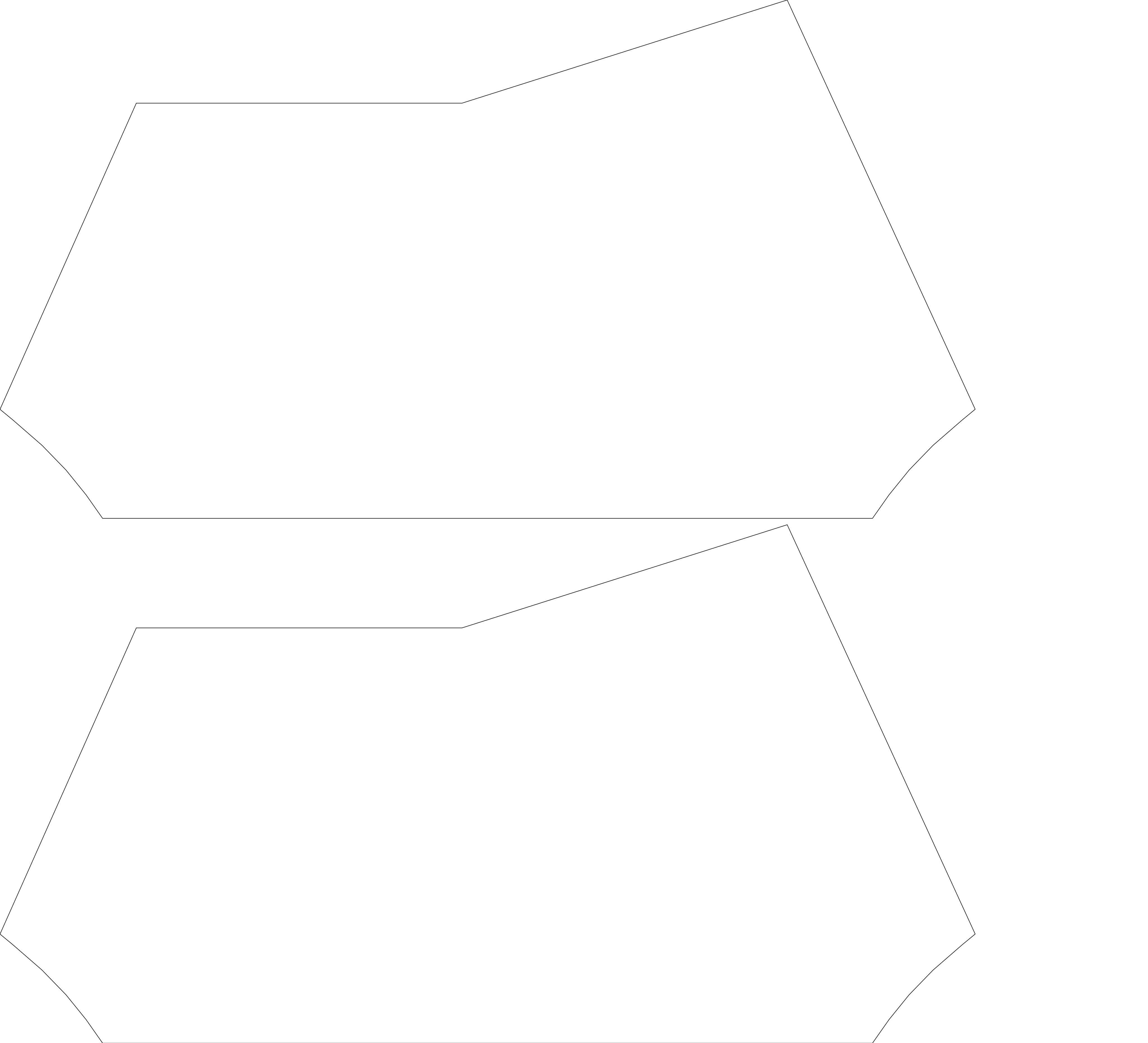
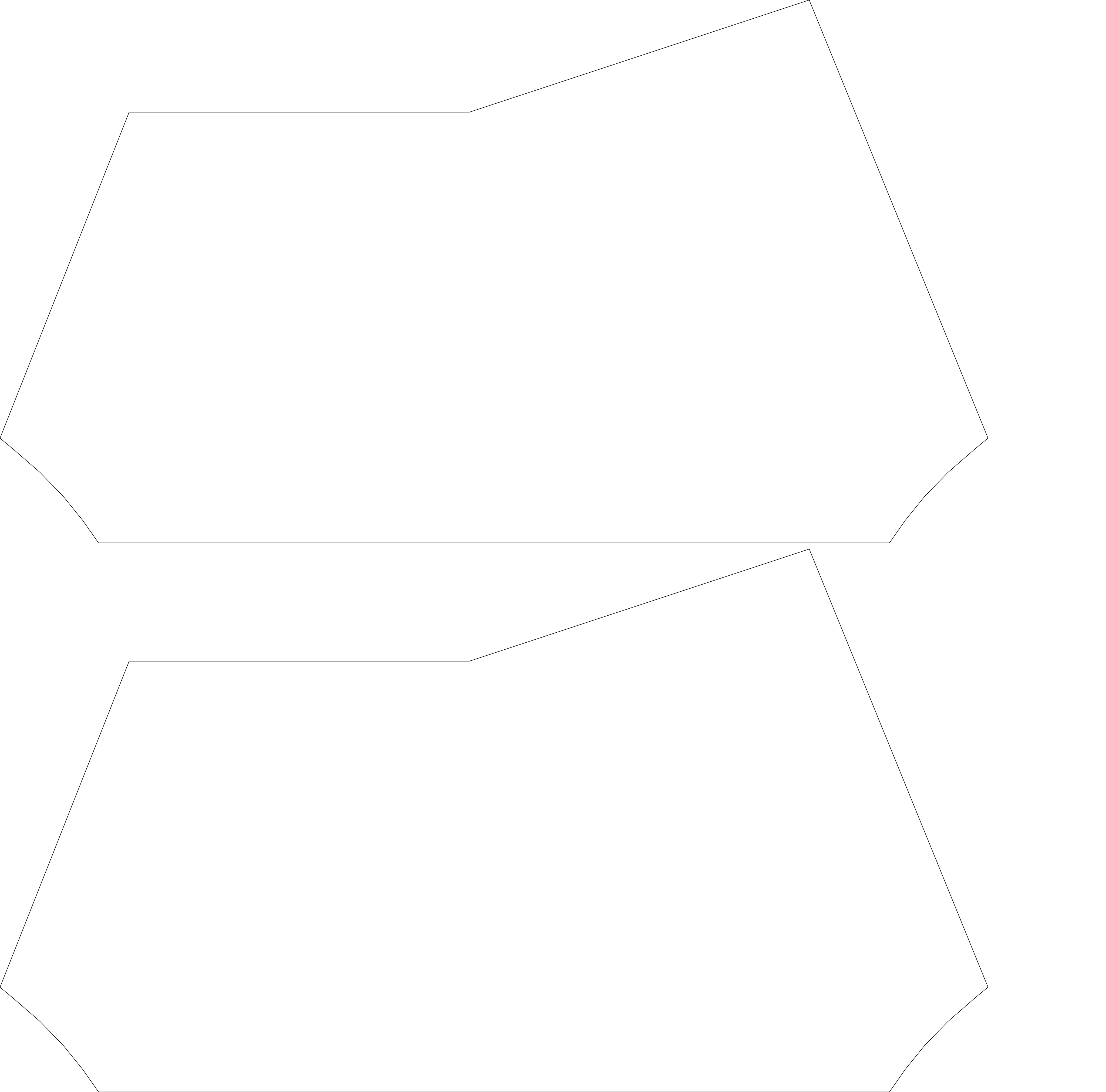
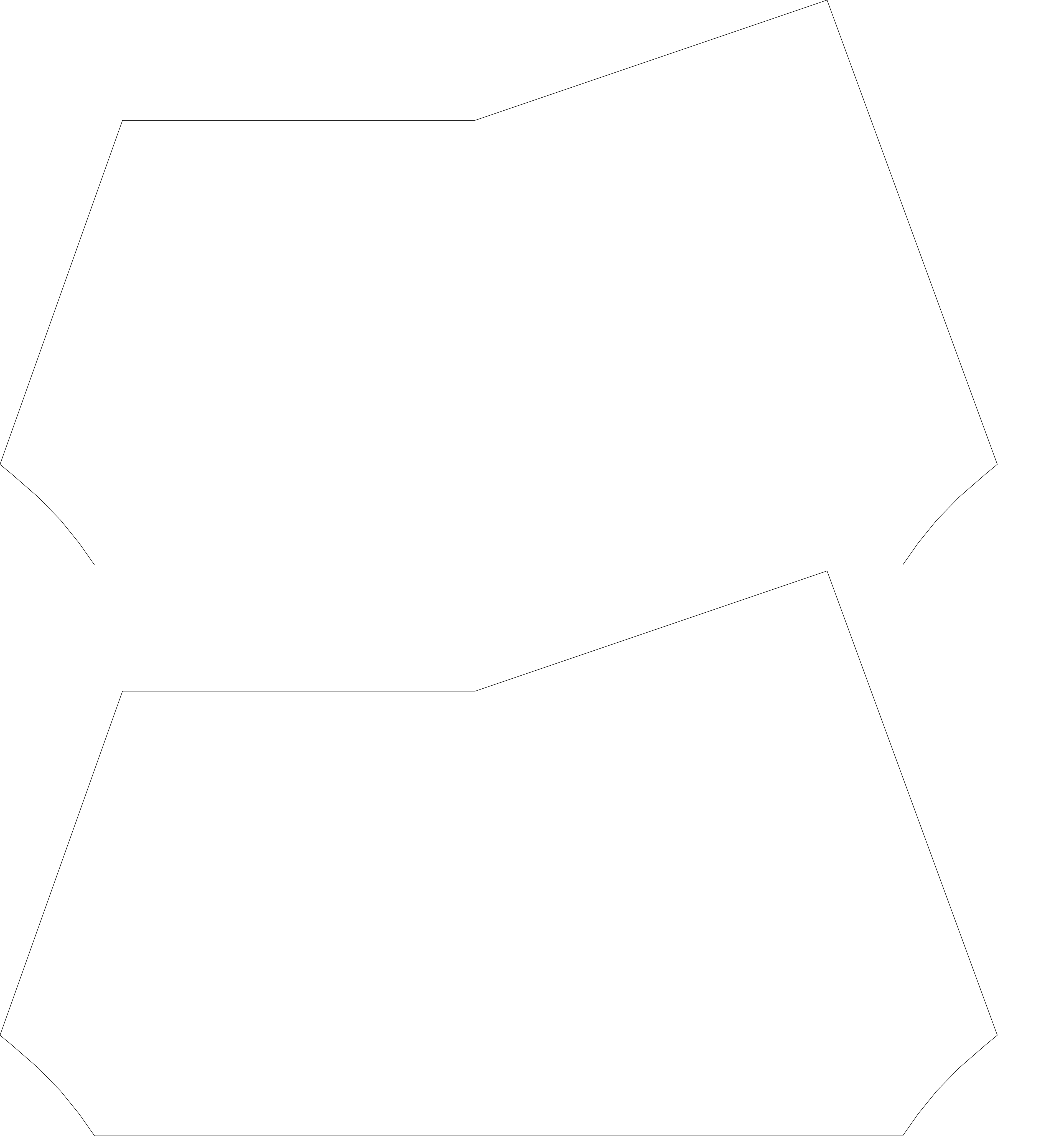
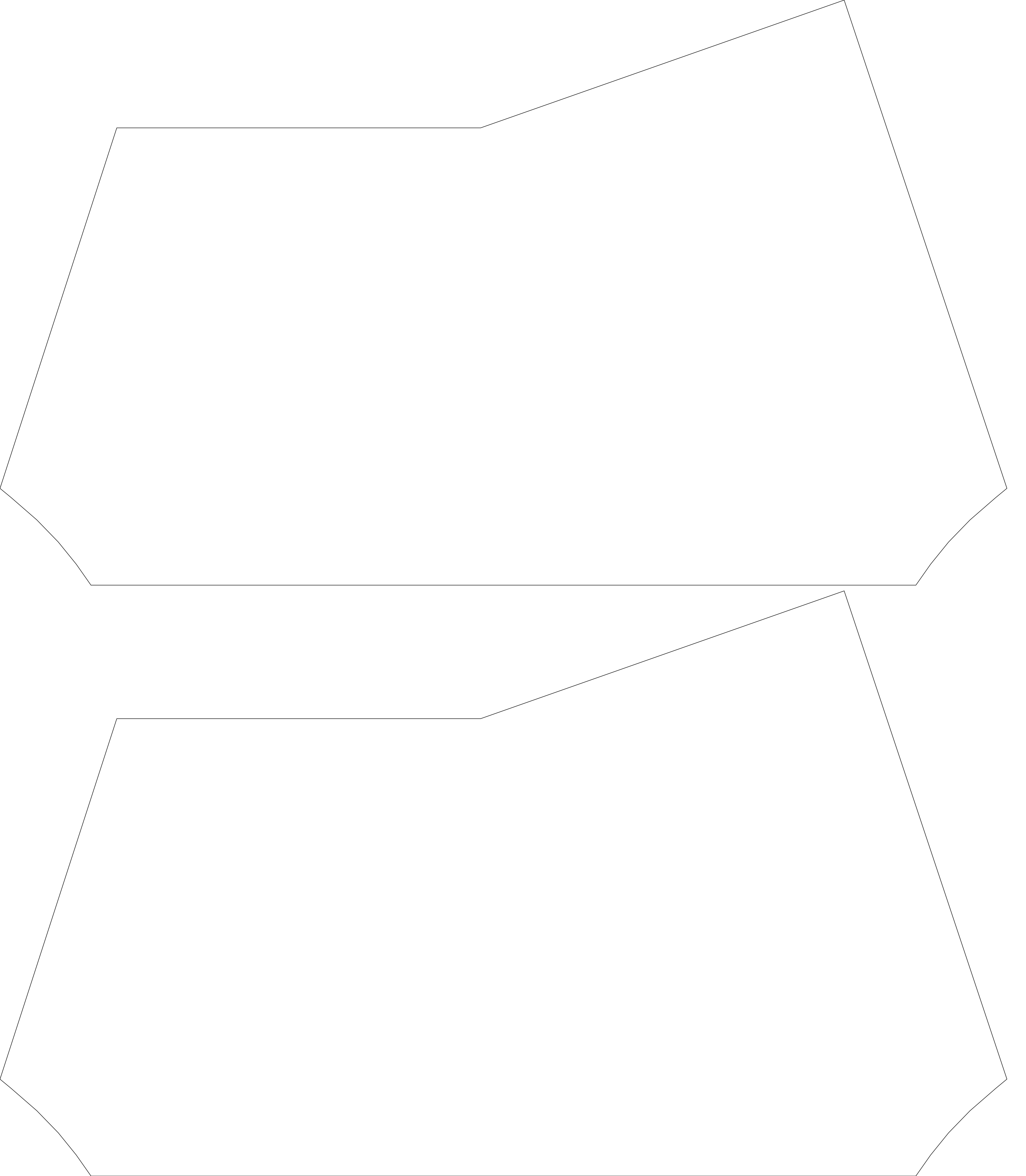
Kunz’s leg made into closed boxers: a front and a back, 5" inseam, elastic waist, flat-felled seams, organic cotton poplin.
The draft
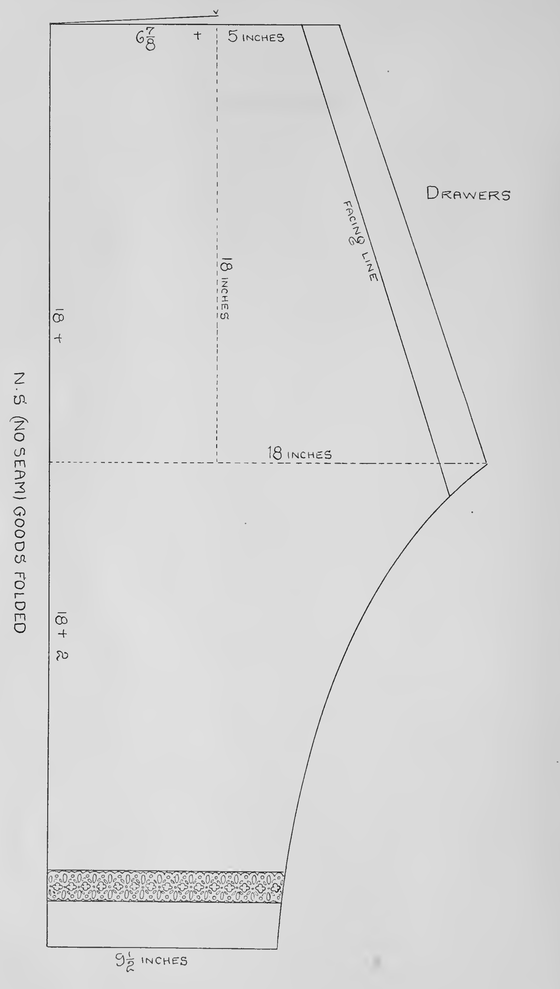
These are 1914 open drawers: each leg is a closed tube below the crotch, and the two legs meet only at the belt. Kunz drew her diagrams at a quarter inch to the inch; her numbers are full-size inches.
Material
Kunz gives no yardage for the drawers. Her worked example is a 27½" waist, 36" long.
The 1914 text
- Draw a horizontal line ¼ of waist measure plus 5 inches for gathers. The entire waist measure is 27½ inches, ¼ of waist measure is 6⅞ inches plus 5 inches for gathers is 11⅞ inches.
- Measure straight down from waist line over the hips the desired length of the garment. It is 36 inches in this illustration, and draw this 36 inch perpendicular line.
- Now use the measurement of all around the limb. It is 36 inches in this instance; divided in order to be drafted on paper, it is 18 inches, and is drawn a dotted horizontal line beginning from ½ the distance on first perpendicular line. Draw this line.
- Also draw down from the right end of the 11⅞ inch waist line to the end of the 18 inch dotted line, and continue down to the bottom of this garment to a point which measures 9½ inches wide at the bottom, and also draw this 9½ inch horizontal line to connect with the first 36 inch perpendicular line.
- Make a facing about 2 inches wide on the line which is drawn from right end of waist line to the 18 inch dotted line, in order to strengthen this portion of the garment.
- Gather the waist line as follows: Gather up 11⅞ inches and baste it to a belt the ¼ of which measures 6⅞ inches, and continue using the ¼ of the belt to the ¼ of the goods until the entire belt of 27½ inches is taken up. Still another way to finish the belt is to make a hem and use a draw string.
- This work represents one-half the garment, the goods being folded.
What was fixed
Sizes
Rows are waist measures, not a body standard: measure yours. Leg width is at the crotch line, both sides of the fold. Length is Kunz’s 36" plus the 2" hem; change it to yours and the crotch line moves with it.
| Waist | Waist line, half leg | Leg width | 45" goods | 60" goods |
|---|---|---|---|---|
| 24" | 11" | 32½" | 2 1/4 yards | 2 1/4 yards |
| 27½" | 11⅞" | 36" | 2 1/4 yards | 2 1/4 yards |
| 32" | 13" | 40½" | 2 7/8 yards | 2 1/4 yards |
| 36" | 14" | 44½" | needs 60" | 2 1/4 yards |
| 40" | 15" | 48½" | needs 60" | 2 1/4 yards |
| 44" | 16" | 52½" | needs 60" | 2 7/8 yards |
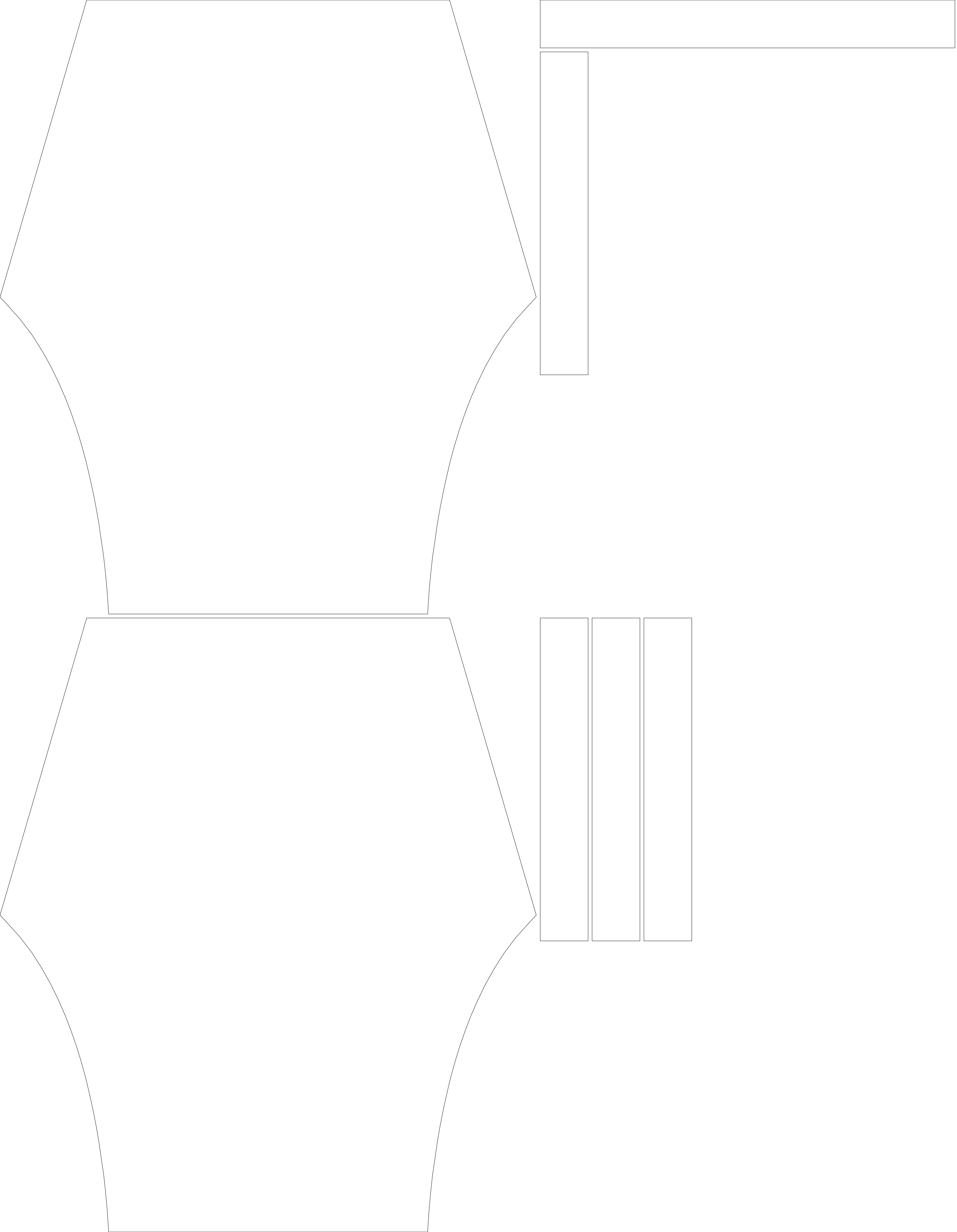
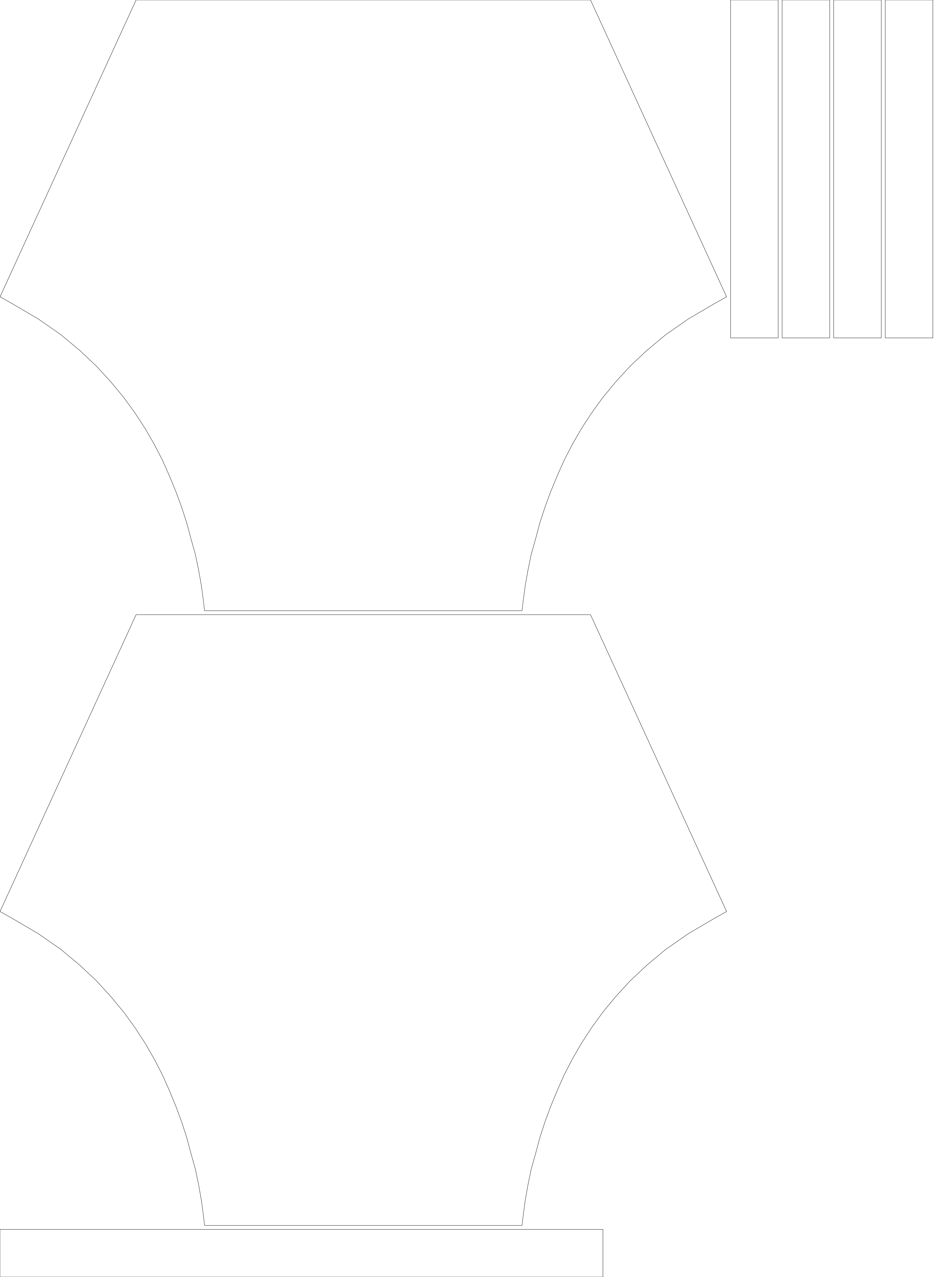
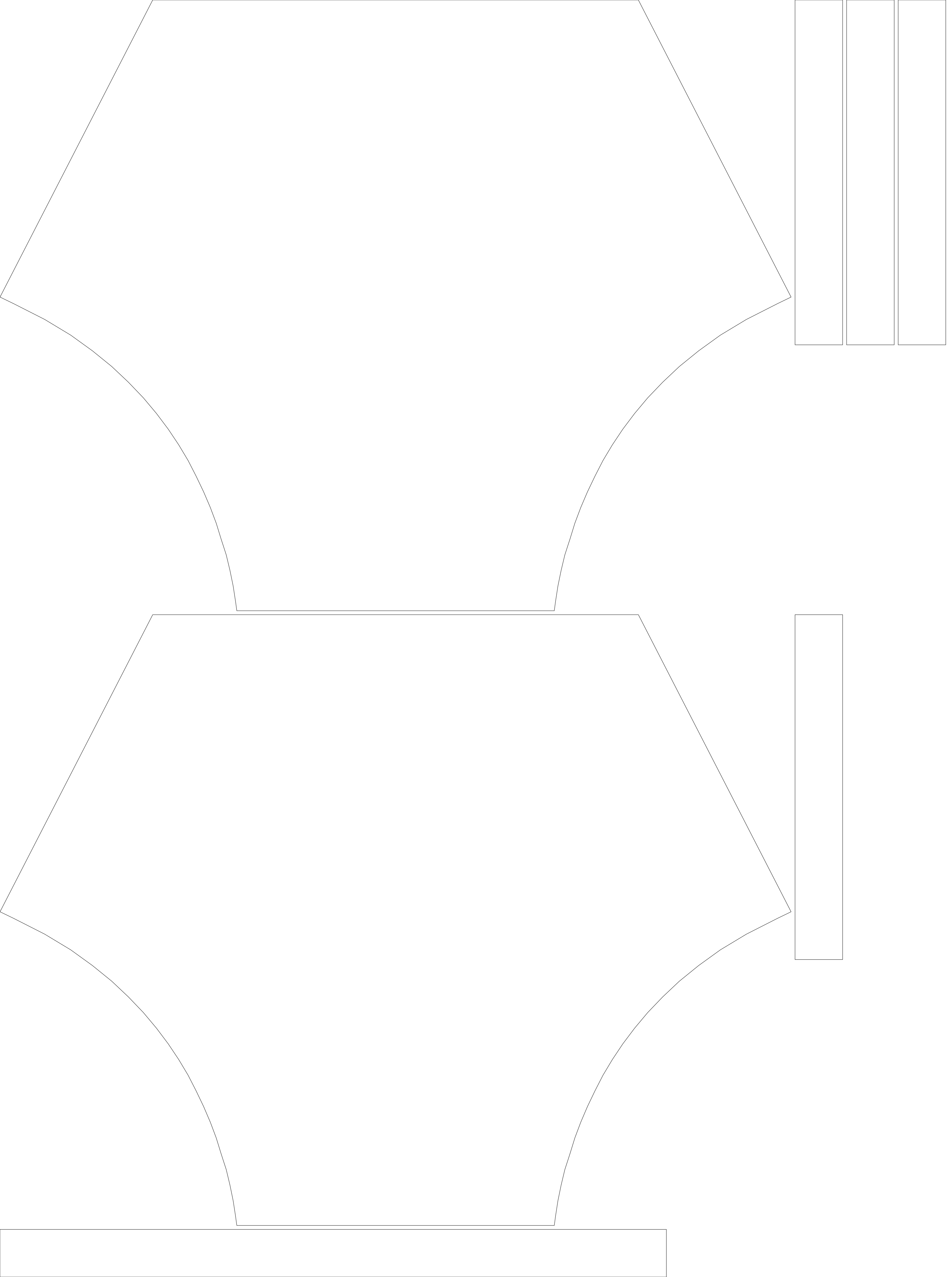
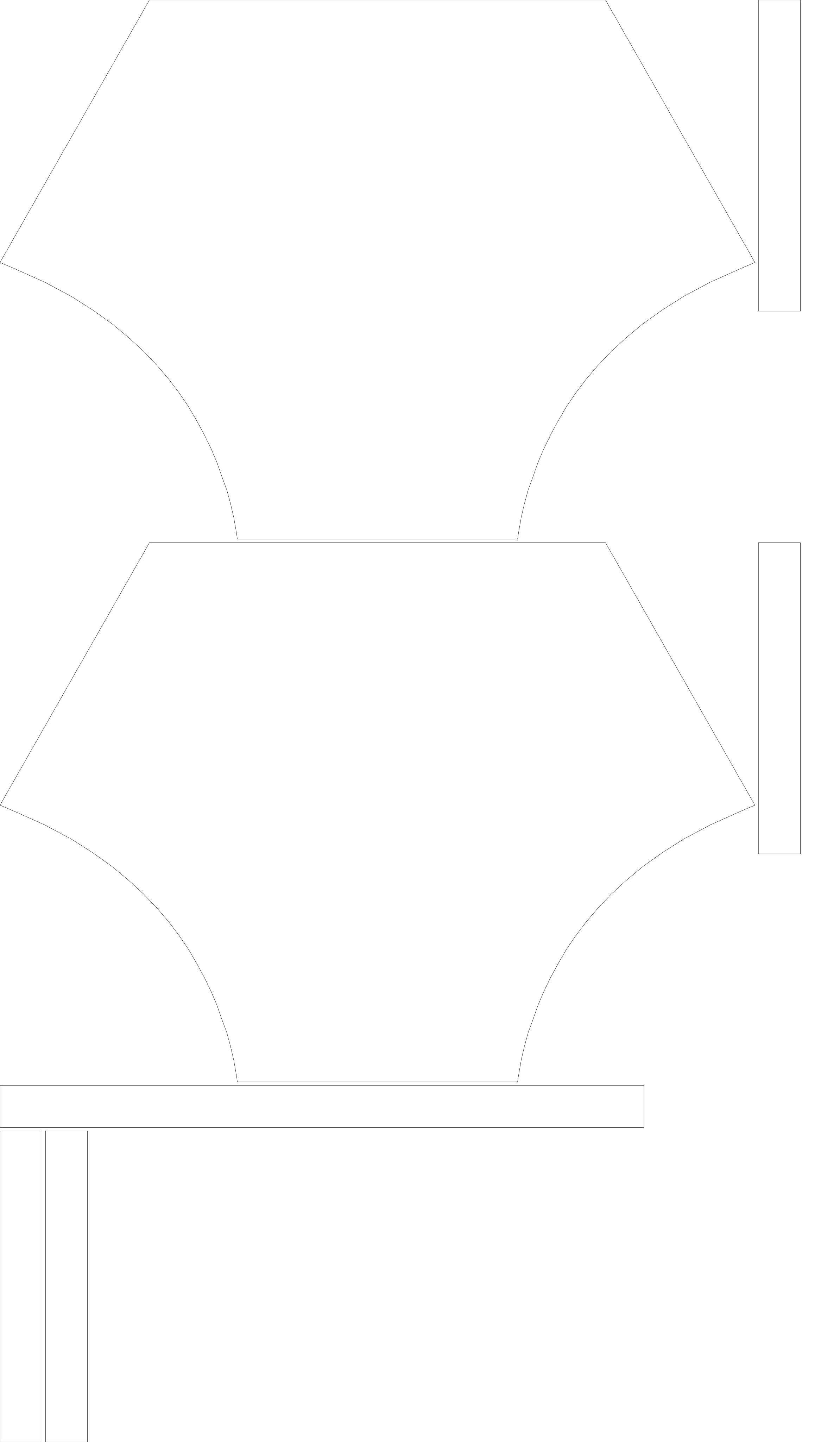
Cut layout, 27½" waist
Plus a button for the belt. Yardage is a straight-line layout of every piece, grain along the selvage.
Sewing
- Measure your waist.
- Measure the length you want, from the waist over the hip to the hem.
- Find your waist in the table, or work the formula: waist line ¼ waist + 5", crotch line at half the length, leg at the crotch line half the limb, hem 9½".
- Fold the goods with the grain running along the fold.
- Lay the straight outside edge of the DRAWERS LEG on the fold and cut two legs.
- Cut four FACINGS and one BELT.
- Fold one leg right sides together so its two curves meet.
- Stitch the inseam ½" from the edge, from the crotch point to the hem. Press the seam open.
- Sew the second leg’s inseam the same way.
- Pin a facing to each open rise edge, right sides together, and stitch with a ½" seam.
- Turn each facing to the inside and press the seam to the edge.
- Turn each facing’s free edge under ¼" and stitch it down.
- Hem each leg: turn the edge under ¼", press, turn up the rest of the 2" allowance, press, and stitch close to the fold.
- Gather the waist of each leg: run two rows of long machine stitches inside the seam allowance and pull the bobbin threads.
- Mark the belt in quarters.
- Lay the legs side by side, openings at front and back.
- Pin each half leg into one quarter of the belt, right sides together. Pull up the gathers until the half leg matches its quarter exactly, then spread them evenly.
- Stitch the belt on with a ½" seam and press the seam into the belt.
- Fold the belt to the inside, turn its edge under ½", and stitch it down.
- Make a buttonhole in the 1" lap and sew the button opposite it.
Cut files, 60" goods
SVG 24"DXF 24"SVG 27½"DXF 27½"SVG 32"DXF 32"SVG 36"DXF 36"SVG 40"DXF 40"SVG 44"DXF 44"
What changed
Sizes
Crotch depth and back rise are starting values worked from Kunz’s pants plate in proportion to the waist. Your own front rise, less 1½", replaces the crotch depth.
| Waist | Crotch depth | Back rises | 45" poplin |
|---|---|---|---|
| 24" | 7⅝" | 3" | 1 yard |
| 27½" | 8⅝" | 3½" | 1 1/8 yards |
| 32" | 10⅛" | 4" | 1 1/4 yards |
| 36" | 11⅜" | 4⅝" | 1 1/4 yards |
| 40" | 12⅝" | 5⅛" | 1 3/8 yards |
| 44" | 13⅞" | 5⅝" | 1 1/2 yards |
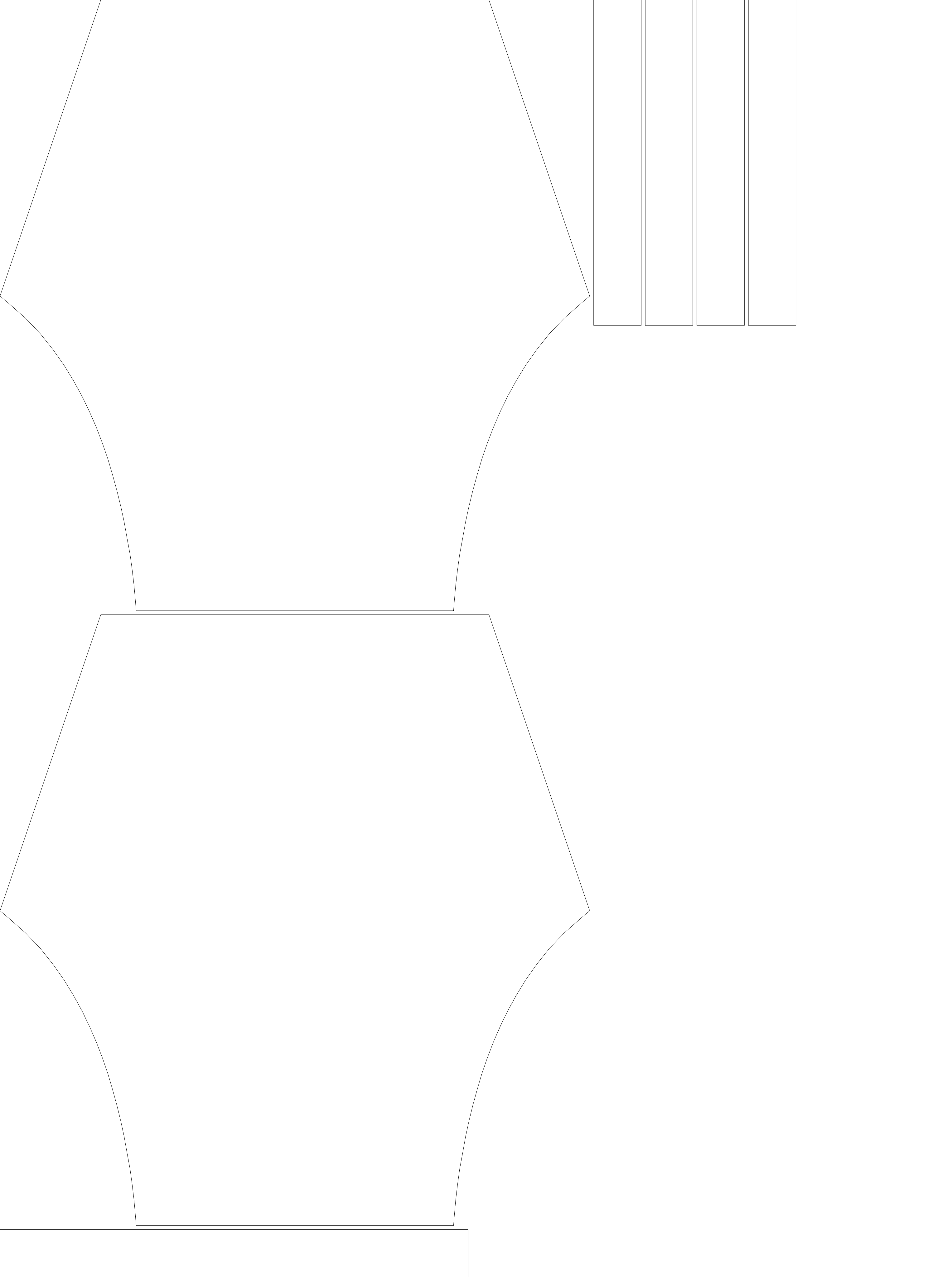
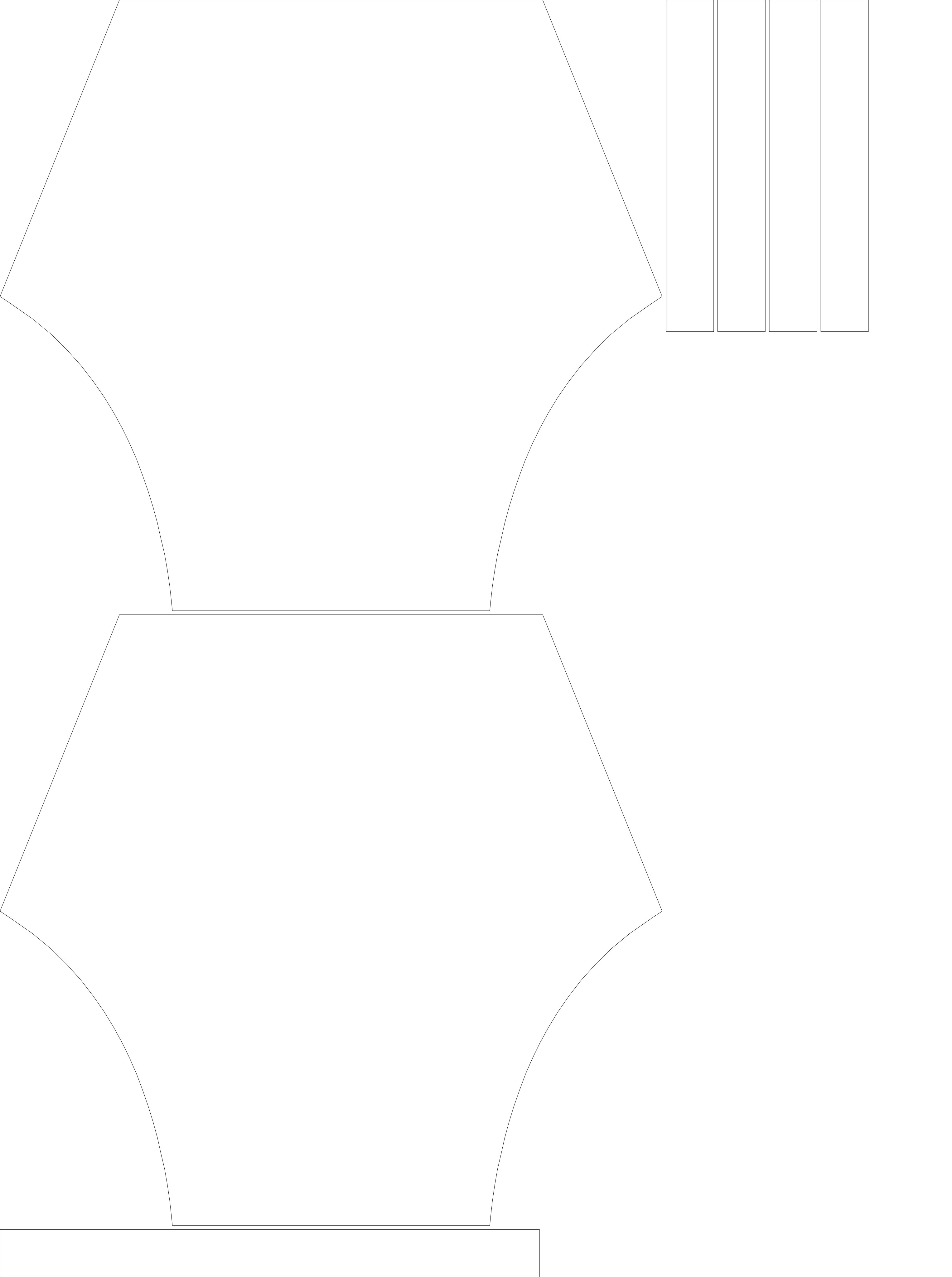
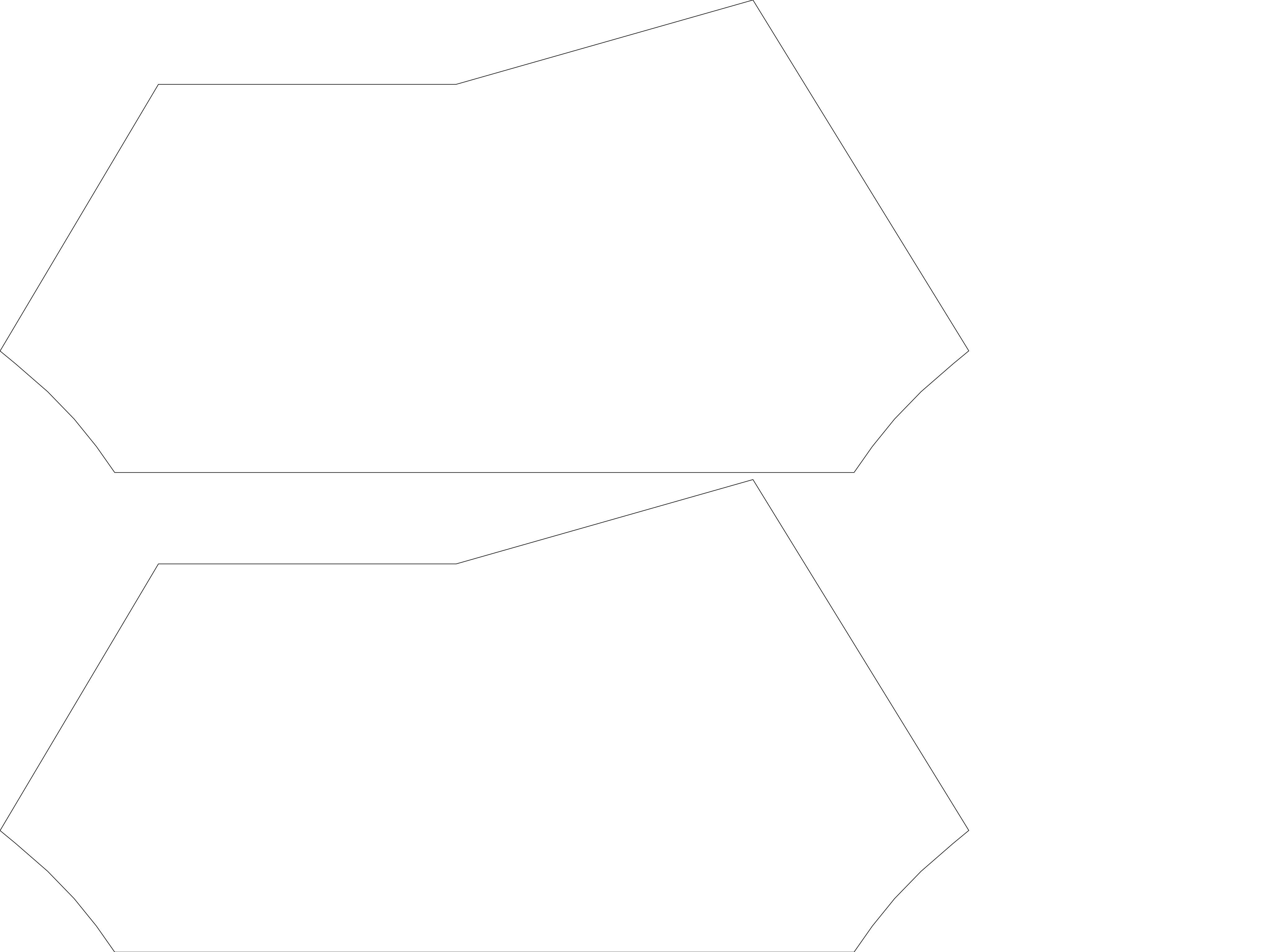
Cut layout, 27½" waist
The leg’s straight outside edge is the grain: keep it along the selvage. The back is the side whose waist rises. Dashed lines inside the cut line are the stitching lines; the dashed line across the top is the waist, the casing folds down to it.
Material
| Item | Amount |
|---|---|
| Organic cotton poplin, 3.4 oz per square yard, 44/45" wide | 1 1/8 yards at a 27½" waist (table above) |
| Boxer elastic, 30 mm | your waist plus 1" |
Sewing
- Find your waist in the table. For a closer fit, measure your front rise and take 1½" off for the crotch depth.
- Cut two BOXER LEGS from organic cotton poplin with the cut file, grain straight down the outside of the leg.
- Fold one leg so its two curves meet, wrong sides together.
- Stitch the inseam ½" from the edge.
- Trim one side of the seam allowance to ¼".
- Fold the wider side over the trimmed one, press it flat toward the back, and stitch close to its fold. This is a flat-felled seam: both raw edges end up locked inside it.
- Sew and fell the second leg’s inseam the same way.
- Turn one leg right side out and slip it inside the other, right sides together.
- Match the crotch points and pin the rise from front waist to back waist.
- Stitch the rise in one run, ½" from the edge.
- Fell the rise the same way as the inseams.
- Turn the top edge under ¼" and press.
- Fold down 1½" more to the inside, press, and stitch close to the lower fold, leaving 2" open.
- Cut the elastic to sit snug around your waist, plus 1" for the overlap.
- Thread the elastic through the casing.
- Overlap the elastic ends 1" and stitch them together.
- Stitch the 2" gap closed.
- Hem each leg: turn the edge under ¼", press, turn up ¾" more, press, and stitch close to the fold.
Cut files, 45" goods
SVG 24"DXF 24"SVG 27½"DXF 27½"SVG 32"DXF 32"SVG 36"DXF 36"SVG 40"DXF 40"SVG 44"DXF 44"
Source
Mattie G. Kunz, Washington, D.C., Manual of Apparel Drafting and Sewing. 1914, revised edition, page 15 and the plate facing it, “Formula for Drawers”. Published in the United States before 1929, so it is in the public domain. The book at the Internet Archive.
Kunz drew the plate at a quarter inch to the inch; it was measured from the scan against her own printed numbers, to about ⅛". Changes marked “graded when built” have not been sewn and tested yet.